Summary Highlights:
- Understand the key components of a single ply commercial roof—deck, insulation, membrane, flashings, drainage, and coatings—and how they work together.
- Spot early warning signs of deterioration so you can address issues before they become costly leaks or structural damage.
- Improve energy efficiency and comfort by ensuring proper insulation, reflective membranes, and well-designed drainage systems.
- Partner with WaterTight Roofing for inspections, maintenance, repairs, and restoration solutions that extend your roof’s lifespan and protect your investment.
A commercial roof is a protective barrier that protects your building from the elements, but it does a lot more than that; it also influences energy consumption, plays a key role in the structural safety of your building (and the elements within it), and even affects operating expenses. It's a complex structure comprised of various components, and understanding these components allows you to identify early signs of deterioration so you can avoid more extensive and expensive repairs, and extend the life of your commercial roof.
At WaterTight Roofing, we are committed to helping our clients protect their investments. In this guide, we provide an overview of the major parts of a commercial roofing system, and why they are important.
The Deck: The Structural Foundation of Your Commercial Roof
The deck is the foundation of your commercial roofing system. From membranes to insulation, the deck is the structural base that supports every other layer. When the deck is in good shape, the rest of the roof will function as intended; when it isn't, serious problems can occur — and they can occur rapidly.
Most commercial roof decks are comprised of one of the following materials:
- Metal: Strong, lightweight, and widely used in industrial settings.
- Concrete: Extremely durable and naturally fire-resistant.
- Wood: Not as commonly used in modern construction, but can still be found in older buildings.
If the deck fails, the rest of the roof will soon follow. Moisture intrusion, rust, or general deterioration can compromise the stability and safety of the structure. With regular inspections, problems can be detected and corrected early, before they can impact your operations.
Insulation: Temperature and Cost Control
Directly above the deck sits a layer of insulation, one of the most critical components of any commercial roofing system. Insulation supports your building in several ways. It helps improve energy efficiency, reduces heating and cooling costs, maintains consistent interior temperatures and increases comfort, and provides structural stability by creating a stable surface for the roofing membrane.
Some of the most common insulation materials used in commercial properties include:
- Polyisocyanurate: Has a high R-value (thermal resistance) and is very versatile.
- EPS/XPS Boards: Durable, lightweight, and moisture-resistant.
When your roof is properly insulated, your building is much more efficient and costs less to operate — illustrating just how important insulation is for a reliable commercial roofing system.
The Membrane: Your First Line of Defense
Next comes the membrane, a waterproof layer that protects your building from the elements. It keeps moisture out, blocks UV rays, and even prevents physical stress by absorbing impacts. The membrane is likely the first thing that comes to mind when you picture a roof, as it's the most visible component and protects every other part of your commercial roofing system.
Popular membrane options include:
- TPO: Highly reflective, flexible and energy-efficient; an ideal choice for flat or low-slope roofs.
- PVC: Chemical-resistant and sturdy, making it a good option for demanding environments.
- EPDM: A durable, long-lasting rubber membrane that is suitable for various applications.
For a membrane to perform properly, correct installation is essential. Reinforced seams and appropriate drainage are crucial to prevent leaks and premature wear. When professionally installed, a quality membrane will ensure your commercial roof protects your building for years to come.
Flashings: Protecting Roof Penetrations
Penetrations, whether caused by drains, vents, pipes, or skylights, create potential points of failure in a commercial roofing system. Flashings, which are typically constructed of metal or reinforced membrane, are designed to create a watertight seal around penetrations, protecting your building.
When installed properly, flashings:
- Prevent water infiltration around equipment.
- Maintain the integrity of seams, despite expansion and contraction caused by temperature fluctuations.
- Safeguard vulnerable areas from wind and moisture.
Because penetrations are often the cause of roof leaks, they must be installed correctly and inspected regularly to ensure long-lasting performance.
Drainage Systems: The Key to Keeping Your Roof Dry and Durable
To function effectively, commercial roofs require efficient drainage — particularly flat and low-slope roofs. Without proper drainage, even the most well-constructed roofs can sustain serious damage.
Commercial roofing drainage systems can include:
- Internal drains to channel water off the roof surface.
- Scuppers that allow water to drain off the roof edges.
- Gutters that direct water runoff away from the building.
- Tapered insulation to guide water toward drains and prevent pooling.
Standing water (or ponding) can degrade membranes, add structural stress, and accelerate roof failure. To avoid unnecessary repairs or premature replacement, maintaining your roof's drainage system is a must.
Protective Coatings: Extending Performance and Lifespan
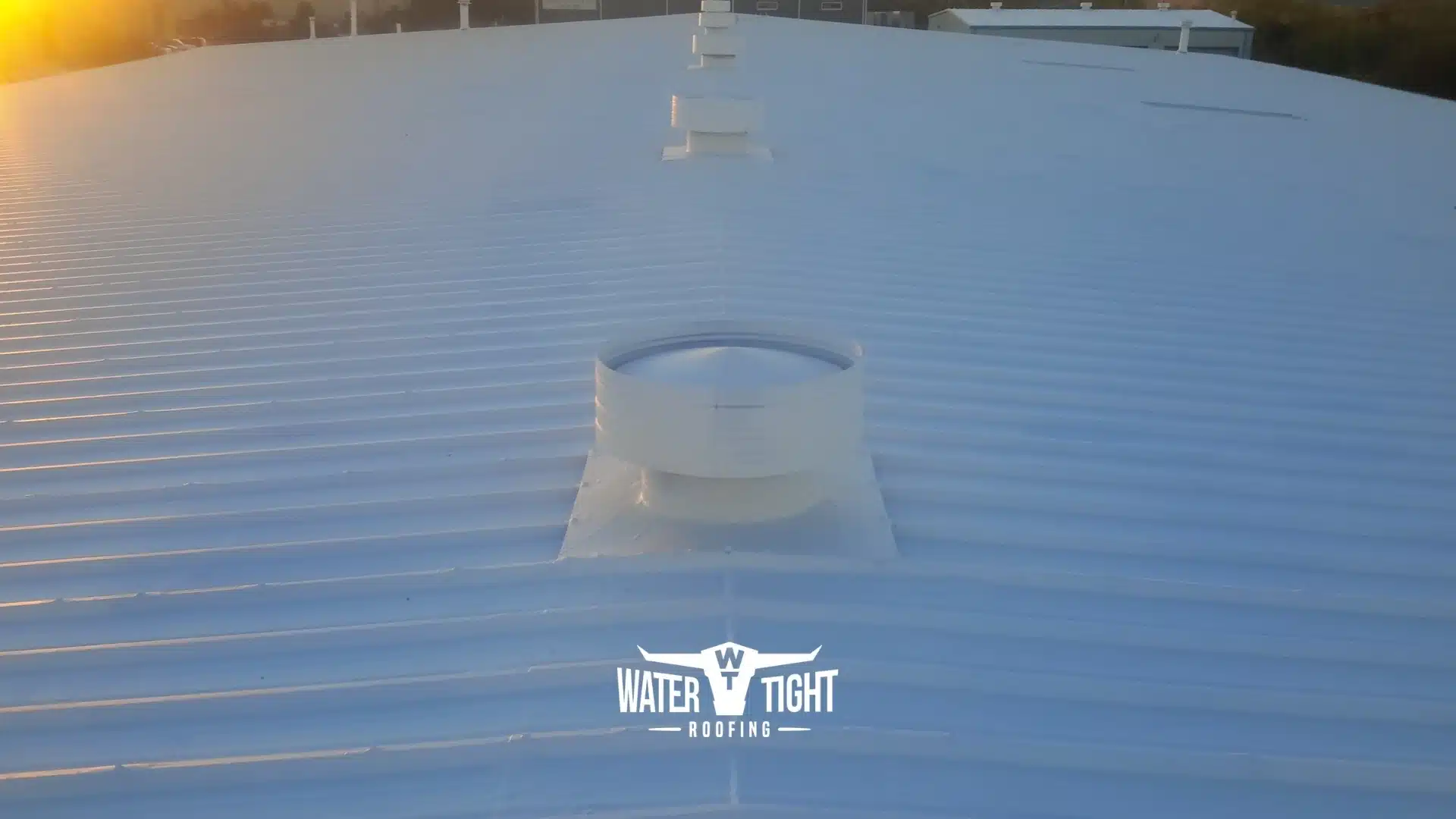
Protective coatings can be a cost effective repair option for older membrane roofing systems. Applied over the membrane, these coatings are designed to enhance durability, increase UV resistance, and improve protection against the elements.
The most common options for old single ply roofing systems are:
- Silicone: Provides superior water resistance, preventing leaks and moisture damage.
- Polyurethane: Durable and impact resistant; ideal for roofs that receive a lot of foot traffic.
When applied correctly, roof coatings can extend the service life of a commercial roof up to 20 years, making them a cost-effective solution for restoring and protecting an existing roofing system.
Maximize the Lifespan and Performance of Your Commercial Roof with WaterTight Roofing
The roof is one of the most important components of your commercial building. A complex system comprised of several components, each part of your commercial roofing system — from the deck to the membranes — plays a key role in protecting your building. Properly maintaining all components of your roof is vital to ensuring long-lasting, reliable performance.
When it comes to repairs, restorations, or new installations, you can count on WaterTight Roofing to provide the guidance and solutions you need to keep your commercial roof in top shape. Get in touch with us today to schedule a consultation and find out how we can help you keep your roof — and your business — safe and secure.
Blog subscribers get new resources and how-to guides delivered via email.
Your Business Relies On Staying Dry